 PickMyPuck
Disclosure: PickMyPuck may earn a commission from some links on this site, at no extra cost to you. Learn more.
Fresh coffee tastes better. That part everyone agrees on. But espresso adds a twist that surprises a lot of new home baristas: beans can be too fresh. Coffee that left the roaster yesterday often pulls fast, foamy, sour shots. Understanding why, and when beans are at their best, is one of the easiest upgrades you can make to your coffee, and it costs nothing.
Roast date vs best-by date
Look at the bag before you buy. Specialty roasters usually print a roast date, the day the coffee was roasted. Many supermarket coffees print only a best-by date, which can be many months away and tells you little about freshness. A roast date lets you plan: you know when the beans will be ready, and roughly how long you have to enjoy them.
Coffee doesn't spoil in a food-safety sense when it gets old (unless it gets damp and moldy). It just fades. The National Coffee Association notes that aging beans lose aroma and the coffee starts to taste flat and stale. For espresso, which concentrates everything, that fade is easy to notice.
Why fresh beans need to rest
Roasting creates a lot of carbon dioxide. Most escapes during roasting, but some stays trapped inside the beans and seeps out over the following days and weeks. That's why good coffee bags have a small one-way valve: it lets gas out without letting air in.
When you brew very fresh coffee, that trapped CO2 rushes out as water hits the grounds. In filter brewing you see it as a big "bloom." In espresso it's more of a problem. Exactly how the gas interferes is still debated: Barista Hustle discusses bubbles slowing flow through the puck and gas encouraging channeling as possibilities. The practical conclusion is clear, though: the low extraction and 'gassy' flavors of too-fresh coffee mean it needs to rest before you use it for espresso. Common signs your beans need more rest:
- huge, bubbly crema that collapses quickly,
- shots that spray or channel, or change a lot from one to the next,
- sour, thin or harsh flavors even when your recipe is normally good.
How long should beans rest for espresso?
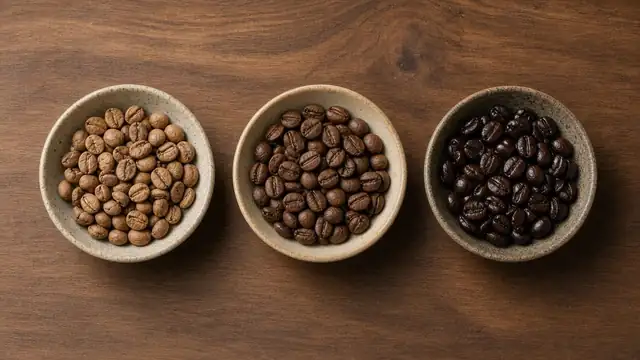
There isn't one magic number, and it depends a lot on roast level. As James Hoffmann explains in his guide to resting coffee, darker roasts produce more CO2 but are more porous, so they lose it faster. Lighter roasts are denser and hold their gas longer, so they usually need more time. As a practical starting point:
- Dark roasts: often ready within a few days of roasting.
- Medium roasts: about a week is a good starting point.
- Light roasts: often taste best after one to two weeks, sometimes longer.
Treat these as guidelines, not rules. Many roasters print their own recommendation on the bag or website; when they do, start there. The best test is your own: pull a shot every couple of days from a new bag and notice when it settles down and starts tasting sweet and consistent.
How long does coffee stay at its best?
Once rested, coffee has a window where it tastes its best, and then it slowly fades. The National Coffee Association suggests whole beans keep their freshness for roughly one to three weeks at room temperature once you're using them (in an airtight container), and recommends buying smaller amounts more often: enough for a week or two. Ground coffee fades much faster, which is why grinding right before you brew makes such a difference.
In practice: if you make two lattes a day from a 12 oz (340 g) bag at about 18 g per double shot, you'll get through it in around nine or ten days. That's a comfortable pace. If you drink less, buy smaller bags or freeze some (more on that below).
How to store beans at home
Coffee's enemies are air, moisture, heat and light. The National Coffee Association's storage advice boils down to a few simple habits:
- Keep beans in an airtight container, or a good resealable bag with the air pressed out.
- Choose opaque over clear. A glass jar of beans on the counter looks great, but light speeds up staling.
- Store somewhere cool and dark, away from the oven, dishwasher, kettle or a sunny windowsill.
- Grind just before brewing. Whole beans hold their flavor far longer than grounds.
- Buy what you'll use in a week or two, rather than a giant bag that fades before you finish it.
Skip the fridge for daily storage. Coffee readily absorbs moisture and odors, and the temperature swings every time you take it out can cause condensation.
Freezing coffee: yes, if you do it right
Freezing used to be on every "don't" list, but it's now common practice among specialty baristas, done carefully. Barista Hustle tasted vacuum-sealed coffee that had spent more than a year in a freezer and found it still tasted very good, with only a slight fade. Freezing slows aging; it doesn't stop it.
The key is protecting the beans from moisture and air:
- Portion first. Split a bag into small airtight containers or bags, ideally a few days' worth or even single doses, so you never refreeze coffee.
- Seal tightly. Vacuum-sealed bags are ideal; airtight containers with minimal air are next best.
- Take out only what you need, and close the rest quickly before condensation forms. The NCA suggests no more than a week's worth at a time.
- You can grind from frozen. Barista Hustle reports that beans ground straight from the freezer, with no thawing, worked well. Note that cold beans can grind slightly differently, so you may need a small grind adjustment.
Freezing is especially handy if you love having several coffees open at once, or if you buy a special bag you want to save for the weekend.
A freshness routine that just works
- Buy bags with a printed roast date, sized to last you one to two weeks.
- Let them rest: a few days for dark, about a week for medium, one to two weeks for light.
- Keep the bag sealed, or move beans to an opaque airtight container, in a cool cupboard.
- Grind right before each shot.
- If a bag will last longer than about three weeks, portion and freeze some of it while it's at its best.
Subscriptions can make this rhythm automatic by delivering fresh bags on a schedule; our subscriptions guide explains how they work. Not sure which coffee to rest in the first place? The Find your coffee quiz points you to a roast and origins in five taps, and Puck can help with the gear.
Quick answers
Is coffee past its best-by date safe to drink?
If it's been kept dry, old coffee isn't a food-safety problem; it just tastes flat. Throw it out if it ever got damp or smells musty or moldy.
Should I keep coffee in the fridge?
It's usually not worth it for the coffee you're using day to day. The National Coffee Association points out that condensation can build up in the refrigerator and that most home containers still let in a little air. A cool, dark cupboard in an airtight container is the simpler choice. If you do refrigerate or freeze beans, use a truly airtight container.
What is the little valve on the bag for?
It's a one-way valve. It lets carbon dioxide from freshly roasted coffee escape without letting outside air in, which is why fresh bags can be sealed right after roasting without puffing up.
Can I use pre-ground coffee for espresso?
You can, but it's a compromise. Ground coffee fades much faster than whole beans, and espresso needs a grind matched to your machine. If you don't have a grinder yet, buy small amounts and use them quickly. Puck's setup builder can help you choose a grinder.
Sources
- National Coffee Association, "Storage and shelf life" (About Coffee)
- Barista Hustle, "A Year in the Deep Freeze"
- Barista Hustle, "Why do espresso shots run faster?"
- Barista Hustle, "Temperature and Grind Size Distribution" (lesson)
- James Hoffmann, "A Beginner's Guide to Resting Coffee" (YouTube)
Coffee flavors vary by farm, harvest, processing and roast. Descriptions here are typical tendencies drawn from the sources above, not tasting notes for any specific product.