 PickMyPuck
Disclosure: PickMyPuck may earn a commission from some links on this site, at no extra cost to you. Learn more.
Walk into any coffee aisle and the first choice you face is roast level. Light, medium, dark, "espresso roast", "French roast": the words are everywhere, but nobody explains what they mean for the shot you're about to pull at home. Let's fix that. By the end of this guide you'll know what roasting actually does to a bean, how each roast behaves in an espresso machine, and how to pick the one that fits the way you drink.
What roasting does to a coffee bean
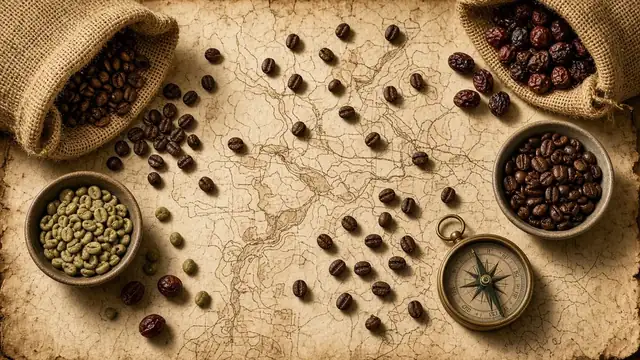
Green coffee is dense, grassy and not much fun to drink. Roasting transforms it. As the beans heat up, sugars and amino acids go through browning reactions (the same family of reactions that browns toast and caramelizes onions), moisture leaves the bean, and the bean swells and becomes more brittle. Hundreds of aroma compounds form along the way.
The longer and hotter the roast, the further those reactions go. That's the whole spectrum in one sentence: lighter roasts keep more of the flavors the coffee brought from its farm, and darker roasts trade those for flavors created by the roast itself. The National Coffee Association sums up the three broad bands like this:
- Light roasts are light brown with no oil on the surface. They taste brighter and more acidic, and they preserve more of the coffee's origin character: florals, citrus, berries.
- Medium roasts are medium brown and still mostly dry on the surface. They're more balanced, with more body and sweetness and less sharp acidity.
- Dark roasts are deep brown to nearly black and often shiny with oil. They taste bolder and more bitter, with roasty, smoky or bittersweet-chocolate notes, and noticeably less acidity.
One important catch: there's no industry-wide standard for these labels. One roaster's "medium" can be another's "light." Treat the label as a hint and read the tasting notes too. If a bag says "jasmine, lemon, peach," it's on the light side no matter what the label says. If it says "dark chocolate, molasses, smoky," expect a darker cup.
Myth check: "dark roast is stronger"
Dark roasts taste more intense, so it's easy to assume they pack more caffeine. They don't, in any way you'd notice. Roasting changes caffeine very little; the differences between roast levels are small. Choose your roast for flavor, and adjust caffeine with how much coffee you use (a double shot versus a single), not with roast color.
How each roast behaves in an espresso machine
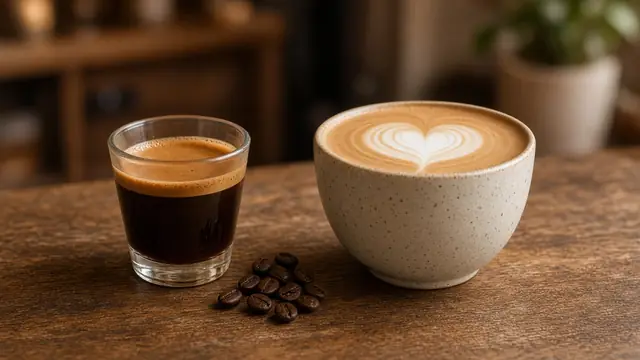
Espresso is a tiny, concentrated brew: hot water pushed through a tightly packed puck of finely ground coffee in well under a minute. That makes it very sensitive to how easily a coffee gives up its flavor, which roasting changes a lot.
Light roasts: rewarding, but they make you work
Lighter roasted beans are denser and harder to extract. Pull one with a "standard" recipe and you'll often get a sour, thin, salty shot, because the water simply didn't dissolve enough of the good stuff. Home baristas who love light espresso usually:
- grind finer than they would for a medium roast,
- run a longer ratio, often around 1:2.5 to 1:3 (for example 18 g of coffee in, 45 to 54 g of espresso out),
- use the hotter end of their machine's temperature range, if it lets them adjust it.
The payoff is a shot that can taste like fruit juice and flowers: vivid, sweet and complex. The cost is that light roasts expose every weakness in your setup. They're easiest with a capable grinder and a machine with stable, adjustable temperature. If you're on an entry-level machine, that doesn't rule light roasts out, but expect more trial and error.
Medium roasts: the friendly middle
Medium roasts are the most forgiving starting point for home espresso. They extract readily, they have enough sweetness and body to taste good across a range of recipes, and they work both as straight shots and in milk. A common starting recipe is a 1:2 ratio, such as 18 g in and about 36 g out in roughly 25 to 30 seconds, then adjust your grind by taste. Many "espresso blends" sit somewhere in the medium to medium-dark range for exactly this reason.
Dark roasts: bold and easy to over-extract
Darker roasts are more porous and give up their flavor quickly. That makes them easy to pull, but also easy to push too far into harsh, ashy bitterness. Dark-roast espresso usually tastes best with:
- a slightly coarser grind than a medium roast,
- a shorter ratio, often 1:1.5 to 1:2,
- a slightly lower brew temperature, if your machine allows it.
Dark roasts are classic in big milk drinks because their bittersweet, chocolatey intensity cuts through a lot of milk. One practical note: very oily beans can leave residue in grinders and hoppers, so clean your grinder a little more often if you drink them daily.
Freshness depends on roast level too
Roasting produces carbon dioxide, and some of it stays trapped in the beans. Fresh beans release that gas when you brew, and in espresso too much of it leads to gassy, under-extracted shots that are hard to dial in. Darker roasts give off their gas faster; lighter, denser roasts hold onto it longer and usually need more resting time before they pull well. Our freshness guide covers roast dates and resting in detail.
Quick comparison
| Light | Medium | Dark | |
|---|---|---|---|
| Typical flavors | Floral, citrus, berry, tea-like | Caramel, milk chocolate, nuts, stone fruit | Dark chocolate, molasses, smoky, roasty |
| Acidity | High | Medium | Low |
| Body | Lighter | Medium to full | Full, heavy |
| Ease at home | Hardest | Easiest | Easy, but watch bitterness |
| Starting ratio | 1:2.5 to 1:3 | About 1:2 | 1:1.5 to 1:2 |
| Best in | Straight shots, small milk drinks | Everything | Lattes, cappuccinos, bold shots |
Ratios are common starting points, not rules. Your grinder, machine, basket and taste all move the target.
So which roast should you buy?
Start from what you drink and what you enjoy:
- Mostly lattes and cappuccinos, and you like a classic "coffee" taste? Go medium to medium-dark. Look for notes like chocolate, caramel, toffee and nuts.
- Mostly straight shots, and you love bright, fruity flavors? Try a light or medium-light single origin, and be ready to grind finer and pull longer.
- You want low acidity and big intensity? A dark roast will deliver. Keep your ratio short and your grind a touch coarser.
- Brand new to espresso? Start medium. It's the easiest way to learn what good extraction tastes like, and it makes the jump to lighter or darker roasts much easier later.
Still unsure? That's what Puck is for. Take the Find your coffee quiz for a roast suggestion in five taps, or ask Puck how your machine and grinder handle different roasts.
A simple way to explore
The fastest way to learn your own taste is a side-by-side. Buy a medium roast and a lighter or darker coffee at the same time, dial each one in until it tastes as good as you can get it, and drink them on alternating mornings. Note what you reach for. Within two bags you'll know far more about your preferences than any label can tell you, and that makes every future bag a better bet.
Quick answers
Is "espresso roast" a special kind of roast?
No. It's a label, not a standard. Roasters use it for coffees they've roasted (and often blended) to taste good as espresso, usually somewhere in the medium to medium-dark range. Any roast level can be brewed as espresso; the label just tells you what the roaster had in mind.
Does dark roast have more caffeine?
Not in any amount you'd notice. Roasting changes caffeine very little, so choose your roast for flavor and control caffeine with how much coffee you use.
Can I use a light roast in a beginner machine?
Yes, but expect to work a little harder. Light roasts are denser and resist extraction, so grind finer and try a longer ratio. Machines with pressurized (dual-wall) baskets are forgiving, but they can make it harder to dial in the bright, delicate flavors light roasts are known for. A medium roast is the easiest place to start.
Why does my dark roast taste burnt or harsh?
Dark roasts give up their flavor easily, so they over-extract quickly. Try a slightly coarser grind, a shorter shot and, if your machine lets you, a slightly lower brew temperature.
Sources
- National Coffee Association, "Roasts" (About Coffee)
- Perfect Daily Grind, "How do you roast coffee for milk?"
- Barista Hustle, "Why do espresso shots run faster?"
- James Hoffmann, "A Beginner's Guide to Resting Coffee" (YouTube)
Coffee flavors vary by farm, harvest, processing and roast. Descriptions here are typical tendencies drawn from the sources above, not tasting notes for any specific product.