 PickMyPuck
Disclosure: PickMyPuck may earn a commission from some links on this site, at no extra cost to you. Learn more.
The same bag of beans can be magic as a straight shot and disappointing in a latte, or the other way around. That's not your imagination, and it's not your technique. Milk changes how we taste coffee, so the best bean for a cappuccino is often different from the best bean for a straight espresso. Once you understand why, choosing beans gets a lot easier.
What milk does to espresso
Steamed milk brings three things to the cup:
- Sweetness. Milk contains lactose, and steaming it well (warm, not scalding) makes it taste sweeter.
- Fat and protein. These coat your palate, soften bitterness and round off sharp edges.
- Volume. In a latte, the espresso might be a sixth or less of the drink. Every flavor in the shot gets diluted.
The result: delicate flavors fade, and bold, sweet, roasty flavors survive. The bright citrus or floral notes that make a light Ethiopian thrilling on its own can disappear under milk, or turn slightly sour. Meanwhile chocolate, caramel, toffee and nutty notes tend to come through clearly and taste like a dessert. Perfect Daily Grind notes that roasters typically develop coffees for milk a little further, with more body and caramelized sweetness, for exactly this reason.
Picking beans for lattes, cappuccinos and flat whites
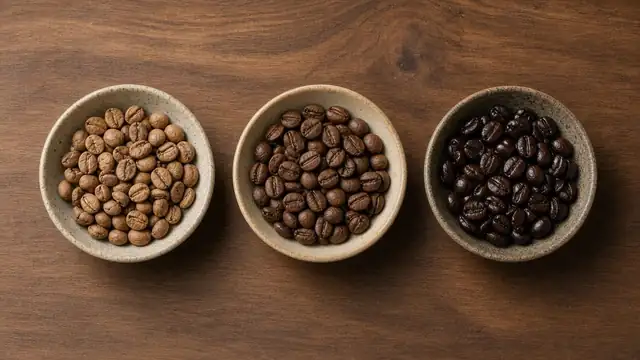
Roast level: medium to medium-dark
For most milk drinks, a medium to medium-dark roast is the sweet spot. It has enough body and roast sweetness to stand up to milk without the harsh bitterness a very dark roast can bring when it's over-extracted. If you love a big, strong-tasting latte or drink large sizes, a darker roast can work well too.
Flavor notes to look for
Scan the bag for words like chocolate, cocoa, caramel, toffee, brown sugar, hazelnut, almond or molasses. These translate beautifully into milk. Notes like "jasmine," "lemon" or "green apple" are signs the coffee may get lost in a big latte.
Origins that tend to shine in milk
- Brazil: nutty, chocolatey, low acidity, heavy body. The classic latte base.
- Colombia: caramel sweetness with enough fruit to stay interesting.
- Guatemala: cocoa and toffee with a little spice.
- Sumatra: deep, earthy and low in acidity, great if you like bold, savory lattes.
- Espresso blends: many are built specifically for milk drinks and for consistency from bag to bag.
Our origins flavor map goes deeper on each.
Drink size matters
The smaller the drink, the more the coffee shows. A cortado (roughly equal espresso and milk) or a small flat white leaves plenty of room for a lighter, fruitier coffee to come through. Natural-process Ethiopians in a cortado are often described as tasting like berries and cream. A 16 oz latte is a different story: there, bold and chocolatey wins. If you love fruity coffee and milk, try making your milk drinks smaller before you change beans.
Picking beans for straight espresso
Straight shots are where coffee has nowhere to hide, which is great news if you want to explore. Every flavor, good or bad, comes through at full volume.
Roast level: whatever you enjoy, often lighter
Many people who drink espresso straight gravitate to medium-light or medium roasts, because they keep more of the coffee's origin character: fruit, florals and sweetness. Dark roasts can make satisfying straight shots too, especially as a short, syrupy ristretto, but they're more likely to taste bitter or ashy if pulled long.
Single origins vs blends
Single origins let you taste a specific place, and straight shots are the best way to appreciate them. Blends give you balance and consistency. Neither is better; it depends on whether you want adventure or a dependable daily shot.
Be ready to dial in
Lighter coffees are harder to extract, so straight-shot lovers usually grind finer and pull a slightly longer ratio than they would for a milk-drink coffee. See our roast guide for starting ratios.
Drinking both? You have options
Lots of people pull a straight shot in the morning and make a latte in the afternoon. Three good approaches:
- One versatile coffee. A medium roast with both sweetness and some fruit, often Colombian or a well-balanced espresso blend, can do both jobs well.
- Adjust the recipe, not the bean. For milk drinks, pull a slightly shorter, more concentrated shot so the coffee stands up to the milk. For straight shots, run it a bit longer to open up sweetness.
- Keep two coffees. If you have the counter space and budget, a chocolatey "milk coffee" plus a fruity "shot coffee" is a fun way to explore. Store the one you use less often carefully (our freshness guide explains how).
How to read a coffee bag in 30 seconds
Most specialty bags tell you more than enough to decide, if you know where to look:
- Tasting notes: the single most useful line. They describe flavors the roaster finds in the coffee, not added flavorings. Use them to sort "milk coffees" (chocolate, caramel, nuts) from "shot coffees" (fruit, florals).
- Roast level: helpful, but remember there's no universal standard. Cross-check it with the tasting notes.
- Origin and process: country, region and "washed" or "natural" hint at the style. A natural process usually means more fruit and body.
- "Espresso" on the label: means the roaster designed or recommends it for espresso, often with milk in mind. Any coffee can be brewed as espresso, though.
- Roast date: tells you how fresh the beans are and when they'll be ready for espresso. Look for an actual date, not just a best-by date.
Cheat sheet
| You mostly drink… | Roast | Look for notes like | Origins to try |
|---|---|---|---|
| Large lattes | Medium-dark to dark | Dark chocolate, molasses, toffee | Brazil, Sumatra, espresso blends |
| Cappuccinos & flat whites | Medium to medium-dark | Milk chocolate, caramel, hazelnut | Colombia, Guatemala, Brazil |
| Cortados | Medium-light to medium | Caramel, red fruit, cocoa | Colombia, Ethiopia (natural) |
| Straight shots | Medium-light to medium | Berry, citrus, stone fruit, honey | Ethiopia, Kenya, Costa Rica, Colombia |
| Bold straight shots | Medium-dark | Cocoa, toffee, spice | Brazil, Guatemala, Sumatra |
A note on iced drinks
Cold mutes sweetness and aroma a little, and ice dilutes the drink as it melts. For iced lattes, the same rule as big hot lattes applies: bold, chocolatey coffees hold up best. For iced americanos, a fruity coffee can be wonderfully refreshing.
Find your match
Tell Puck how you drink and what flavors you love in the Find your coffee quiz, and you'll get a starting roast and origins in five taps. If your machine or grinder is still on the wish list, build your setup with Puck.
Quick answers
Do I need different beans for oat or other plant milks?
Not necessarily. Plant milks bring their own flavors, and oat milk in particular tends to taste sweet and mild, so it usually pairs nicely with the same chocolatey, nutty coffees that work in dairy. "Barista" versions of plant milks are made to steam and foam better, which helps more than changing your beans.
Can I drink a coffee labeled "espresso blend" as a straight shot?
Of course. Many people love espresso blends straight. The label tells you what the roaster designed it for, not a rule about how to drink it.
Should I pull shots differently for milk drinks?
Many baristas pull a slightly shorter, more concentrated shot for milk drinks so the coffee isn't washed out, and a slightly longer one for straight espresso. Start with your normal recipe and adjust by taste.
What if I only buy one bag for everything?
Pick a medium roast with chocolate, caramel or nutty notes. It's the most versatile choice: sweet enough for straight shots and bold enough to show up in a latte.
Sources
- Perfect Daily Grind, "How do you roast coffee for milk?"
- National Coffee Association, "Roasts" (About Coffee)
- Perfect Daily Grind, "What Do Coffees From Around The World Taste Like, & Why?"
- Specialty Coffee Association, "How to Use the Coffee Taster's Flavor Wheel in Eight Steps"
Coffee flavors vary by farm, harvest, processing and roast. Descriptions here are typical tendencies drawn from the sources above, not tasting notes for any specific product.